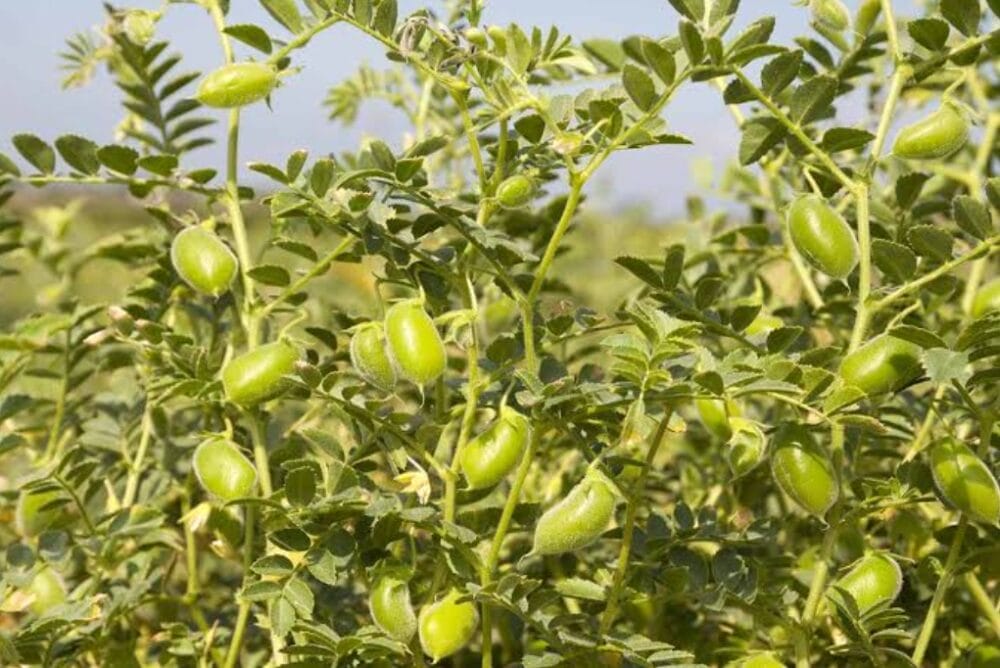
Cultivation of Chickpeas
Chickpeas (Cicer arietinum), commonly known as gram or chana, are one of the most important pulse crops grown across India and many parts of the world. They are valued for their high protein content, ability to improve soil fertility, and strong market demand. Chickpeas are mainly cultivated as a rabi (winter) crop and play a vital role in sustainable agriculture due to their nitrogen-fixing ability.
This blog explains the complete process of chickpea cultivation, from climate and soil requirements to harvesting and yield.
Table of Contents
Climate Requirements
Chickpeas grow best in cool and dry climatic conditions. The ideal temperature for germination ranges between 20°C and 25°C, while crop growth and pod development perform well at 25°C to 30°C. Excessive rainfall or high humidity during flowering and pod formation can lead to disease outbreaks.
Chickpeas are drought-tolerant and are well suited to areas with low to moderate rainfall (60–90 cm annually).

Frost and waterlogging should be avoided, as they can damage the crop.
Soil Requirements
Well-drained loamy or sandy loam soils are ideal for chickpea cultivation. The soil should be neutral to slightly alkaline, with a pH range of 6.0 to 8.0. Heavy clay soils with poor drainage are unsuitable because chickpeas are sensitive to water stagnation. Proper land leveling and drainage are essential to prevent root rot and wilt diseases.
Land Preparation
Land preparation begins after the harvest of the previous crop. The field should be ploughed 2–3 times to obtain a fine tilth and remove weeds. One deep ploughing followed by harrowing is recommended. Incorporating well-decomposed farmyard manure (FYM) at 5–10 tons per hectare improves soil structure and fertility.
The field should be leveled properly to ensure uniform sowing and irrigation.
Seed Selection and Varieties
Choosing high-yielding and disease-resistant varieties is crucial for successful chickpea farming. Popular chickpea varieties in India include JG 11, Pusa 372, Pusa 256, ICCV 2, and JAKI 9218. Seeds should be clean, bold, and free from pests and diseases.
Seed treatment with Rhizobium culture helps in nitrogen fixation, while fungicide treatment (such as carbendazim or thiram) protects against soil-borne diseases.
Sowing Time and Method
Chickpeas are generally sown from mid-October to mid-November, depending on the region. Timely sowing is important for better yield. Delayed sowing can reduce productivity and increase disease incidence.
The recommended seed rate is:
- Desi varieties: 60–75 kg per hectare
- Kabuli varieties: 100–125 kg per hectare
Sowing is done using seed drills or behind the plough at a depth of 8–10 cm, with row spacing of 30–45 cm and plant spacing of 10 cm.
Nutrient Management
Although chickpeas fix atmospheric nitrogen, they still require basal fertilization. A general fertilizer recommendation per hectare includes:
- 20 kg Nitrogen
- 40–60 kg Phosphorus
- 20 kg Potash (if soil is deficient)
Phosphorus is particularly important for root development and nodulation. Applying zinc or sulfur in deficient soils can significantly improve yields. Organic inputs like compost and vermicompost further enhance soil health.
Irrigation Management
Chickpeas are mostly grown as a rainfed crop, but one or two irrigations can greatly improve yield. Critical stages for irrigation include:
- Pre-flowering stage
- Pod formation stage
Over-irrigation should be avoided as it can lead to root diseases. Proper drainage is essential, especially in heavy soils.
Also Read:Why Tomato Cages Are Actually Terrible
Weed Management
Weeds compete with chickpeas for nutrients, moisture, and light, especially during the early growth stages. One or two hand weedings at 25–30 days after sowing are effective. Chemical control using pre-emergence herbicides like pendimethalin can also help manage weeds efficiently.
Pest and Disease Management
Common pests affecting chickpeas include gram pod borer (Helicoverpa armigera), aphids, and cutworms. Integrated pest management (IPM) practices such as pheromone traps, biological agents, and need-based insecticide application are recommended.
Major diseases include wilt, root rot, and Ascochyta blight. Using resistant varieties, crop rotation, and proper seed treatment helps minimize disease incidence.
Also Read: Efficon Insecticide: Advanced Pest Protection for Healthy Crops
Harvesting and Yield
Chickpeas are ready for harvest when plants turn yellow and leaves dry and fall off. Harvesting is done manually or using harvesters. The crop is dried thoroughly before threshing to reduce moisture content.
The average yield ranges from 12–20 quintals per hectare, depending on variety, soil fertility, and management practices.
Benefits of Chickpea Cultivation
- High protein crop with strong market demand
- Improves soil fertility through nitrogen fixation
- Low water requirement
- Suitable for crop rotation and intercropping
- Provides income stability to farmers
Frequently Asked Questions (FAQ)
Q1. Is chickpea a rabi or kharif crop?
Chickpea is primarily a rabi (winter) crop grown after the monsoon season.
Q2. How long does chickpea take to mature?
Chickpeas usually mature in 90–120 days, depending on the variety and climate.
Q3. Can chickpeas be grown without irrigation?
Yes, chickpeas are drought-tolerant and can be grown under rainfed conditions, though one irrigation can increase yield.
Q4. What is the best soil for chickpea cultivation?
Well-drained loamy or sandy loam soil with a pH of 6.0–8.0 is ideal.
Q5. What is the main pest of chickpea?
The gram pod borer is the most serious pest affecting chickpea crops.
Also Read: Exploring Bog Farming: The Role of Irish Peat in Agriculture